

There are some locations where the photographer has to work hard to find a picture. God’s Own Junkyard is not one of them.
If anything, the problem is the opposite.
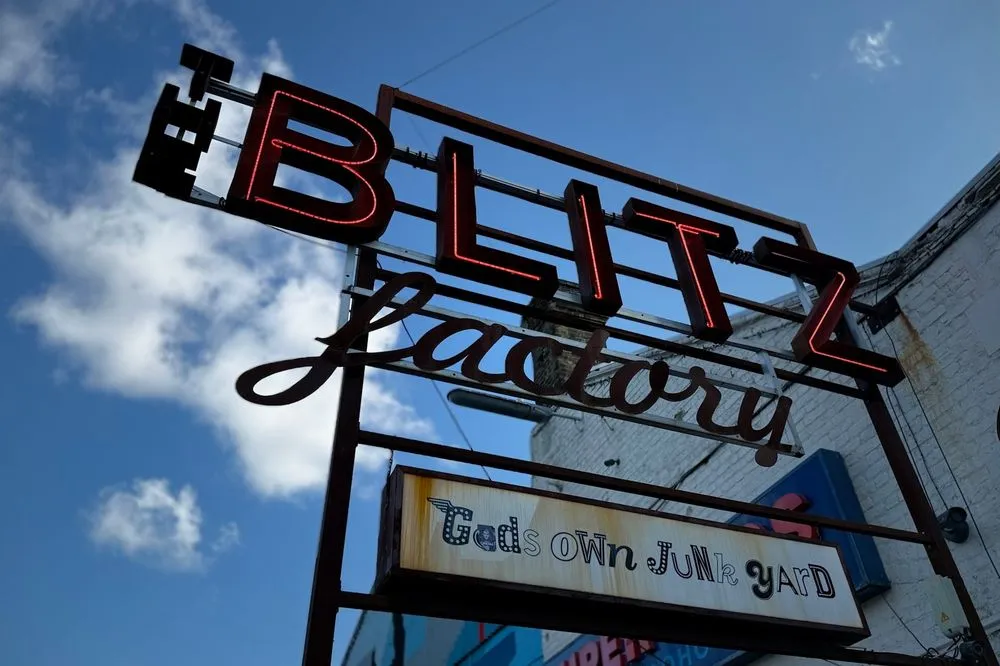
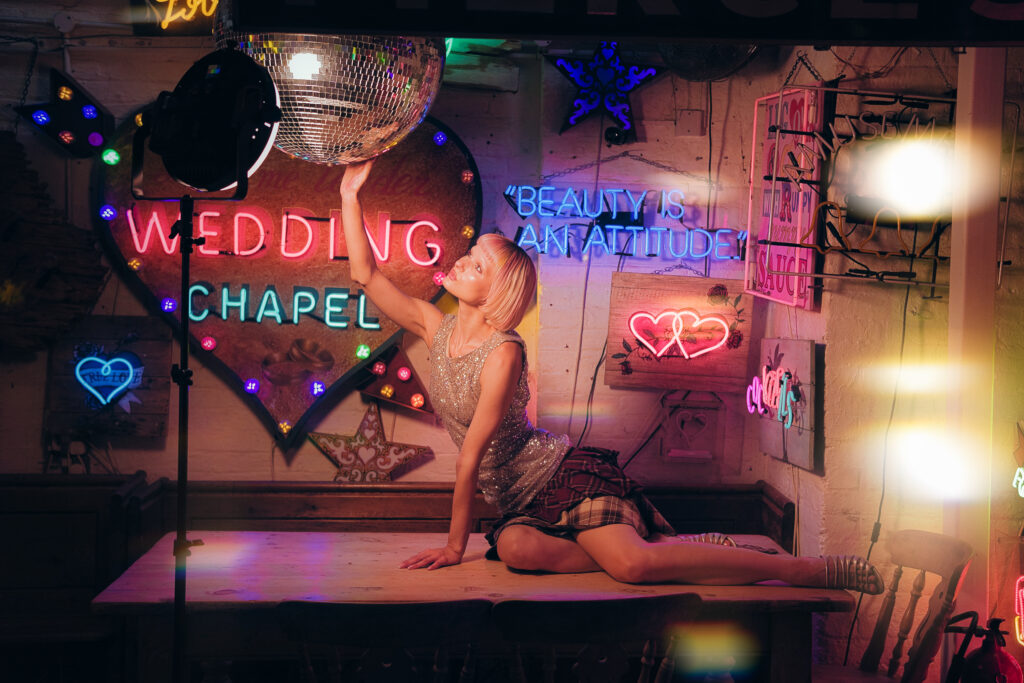
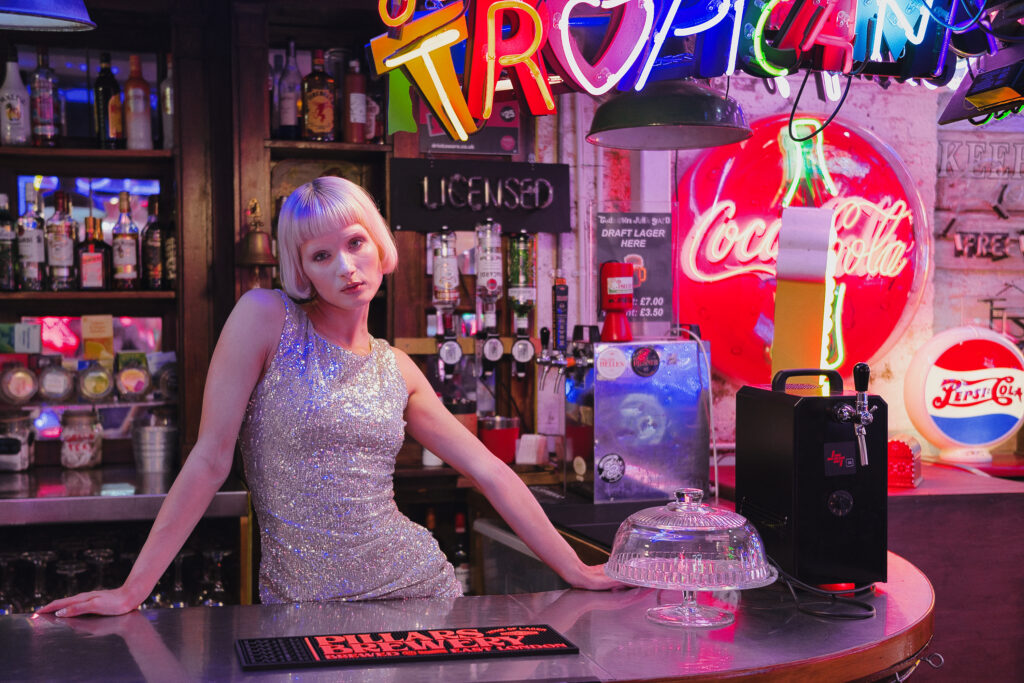
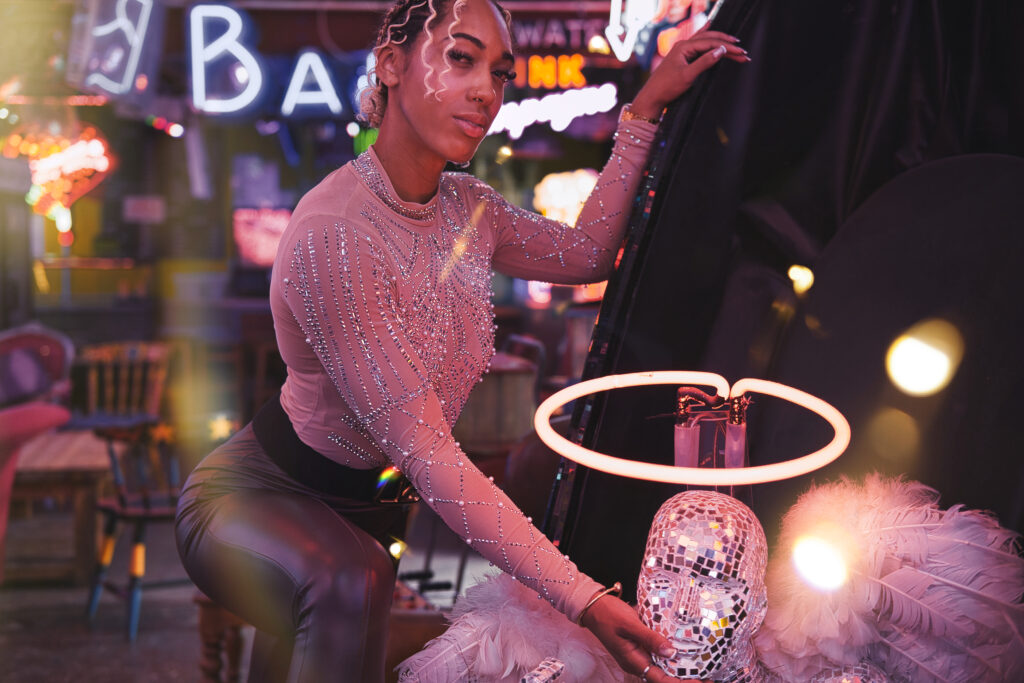
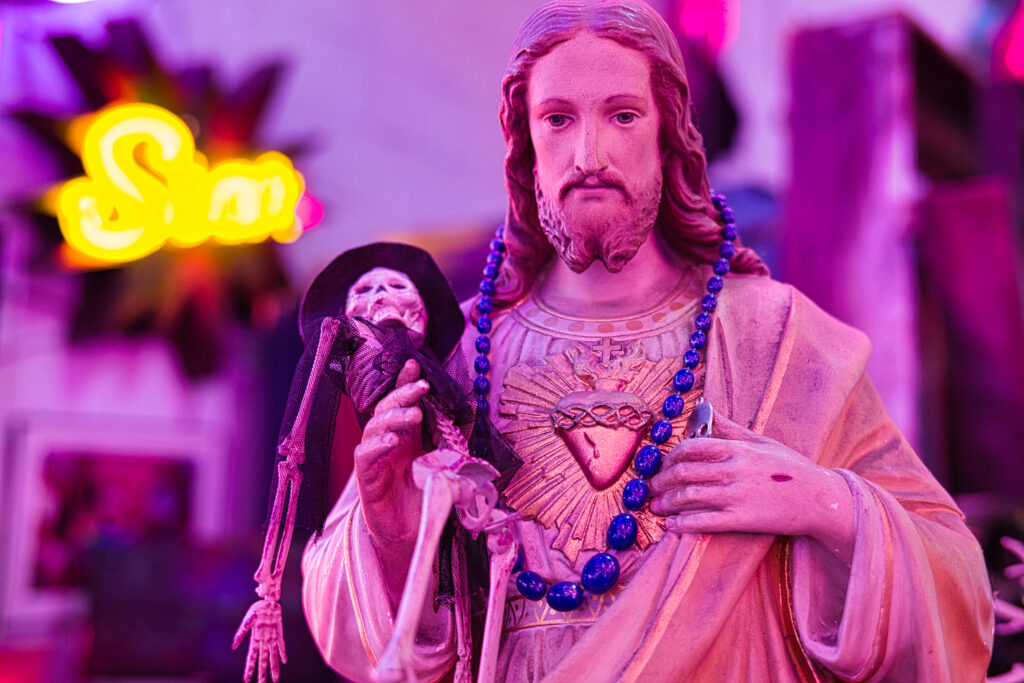
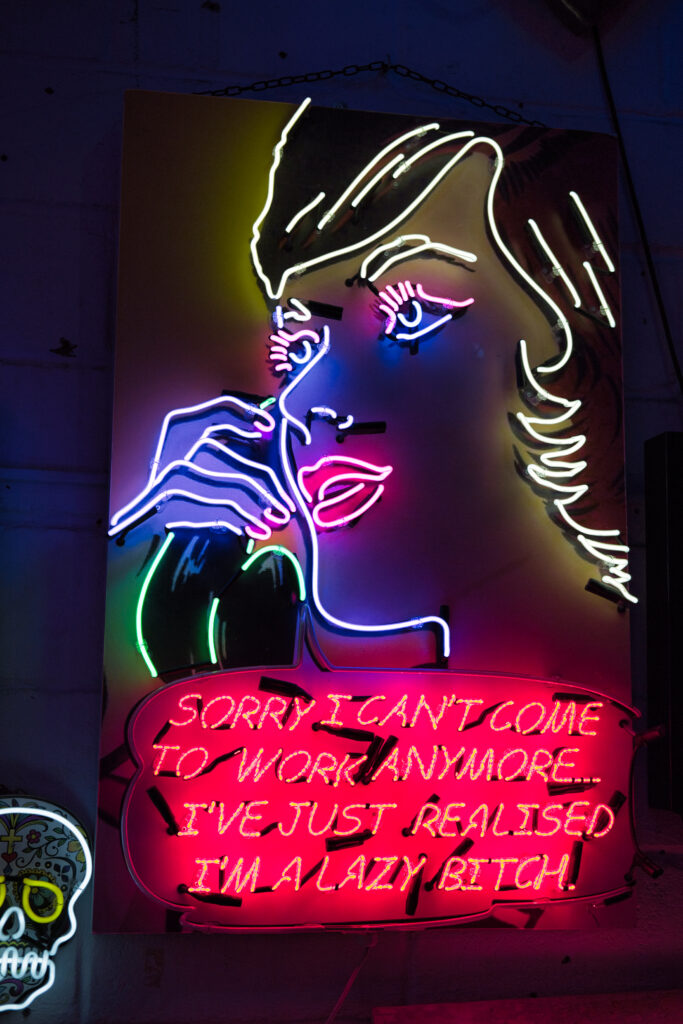
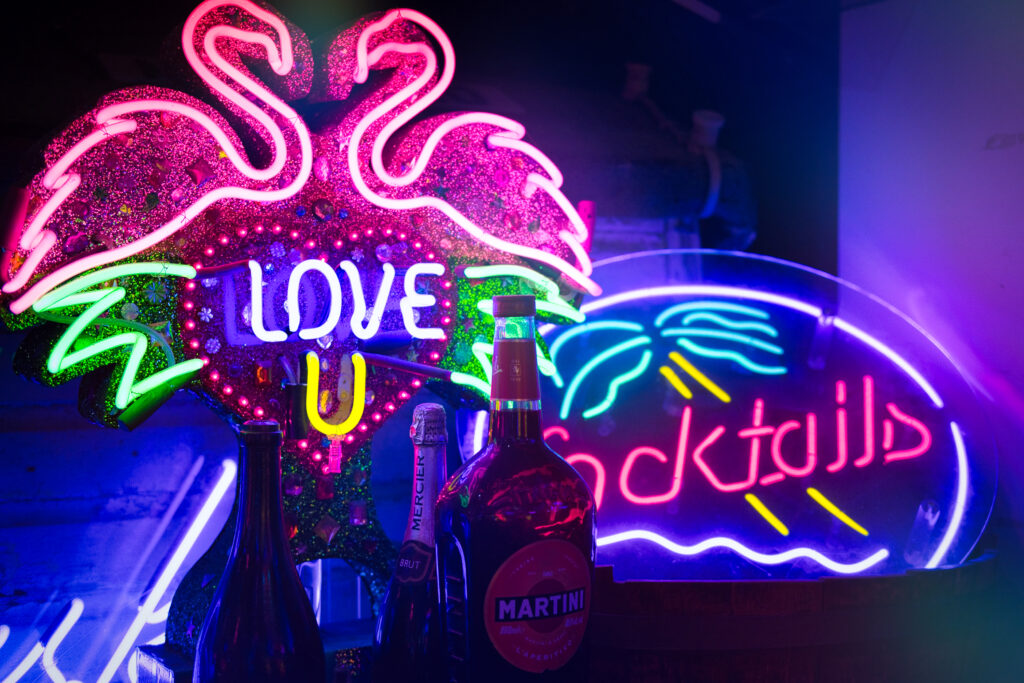
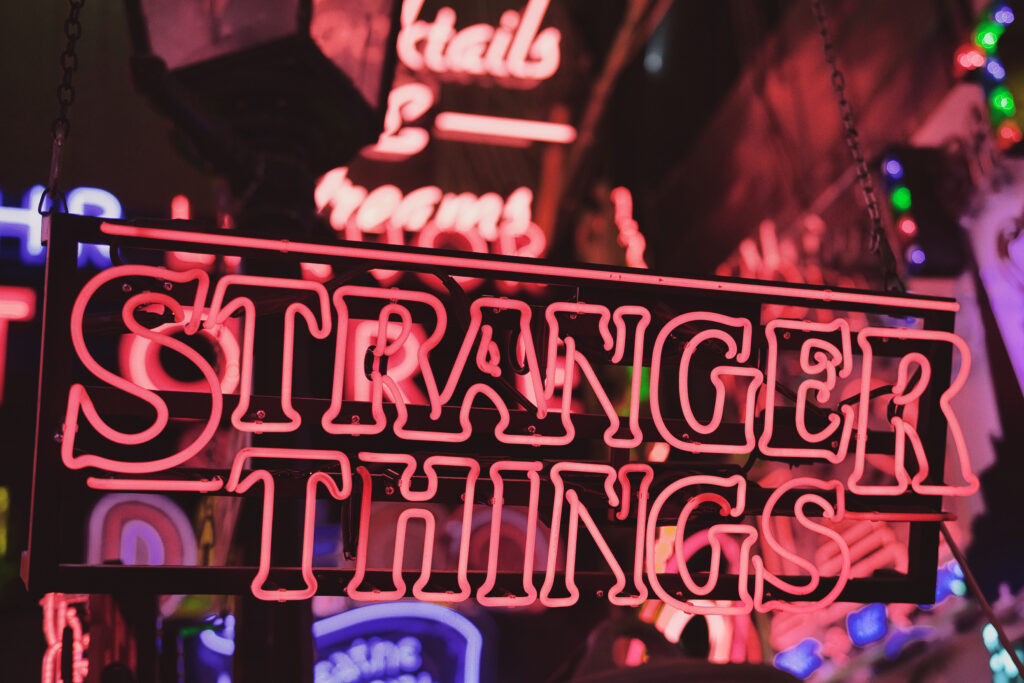
Walk into this extraordinary collection of neon signs in Walthamstow, and almost everything is demanding your attention. Words, colours, reflections, old advertising signs and hundreds of individual light sources compete for space. It is wonderfully chaotic. And that makes it a surprisingly challenging place to photograph people.
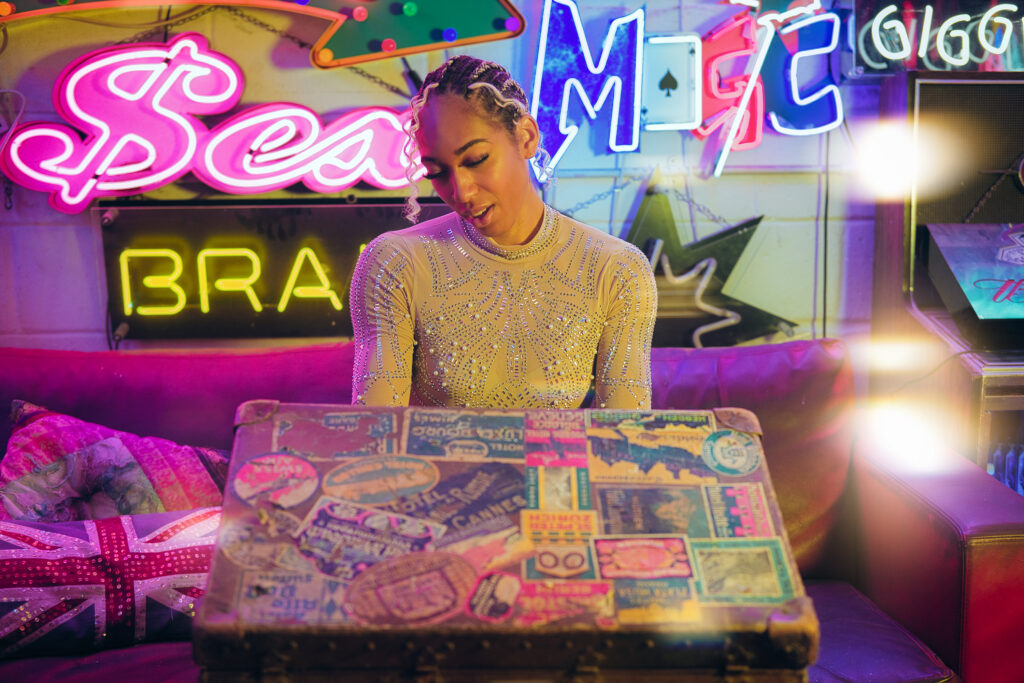
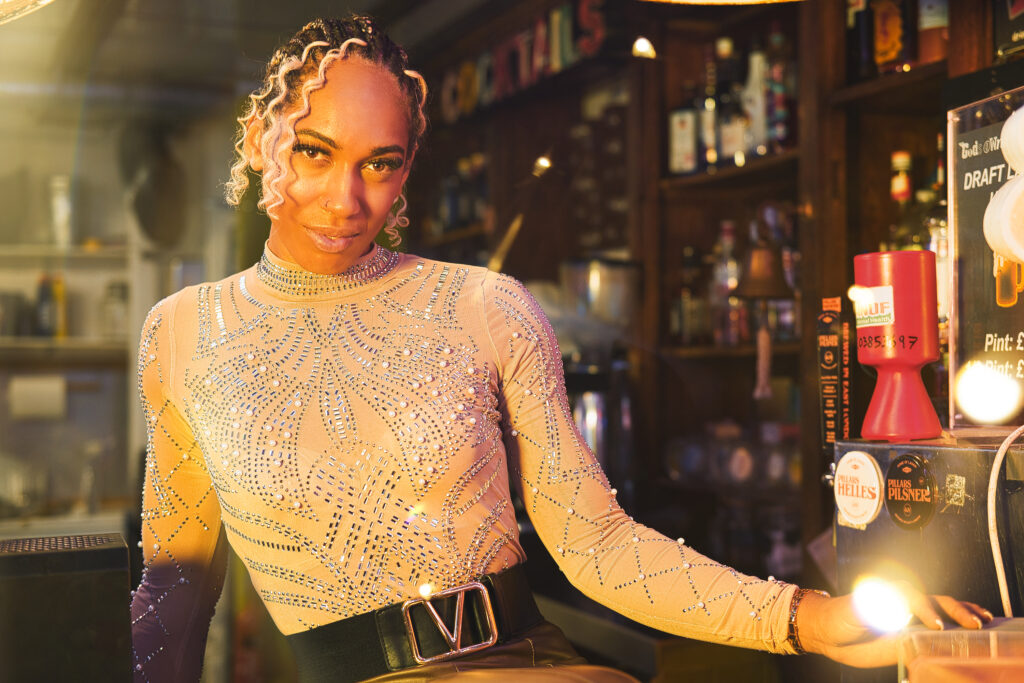
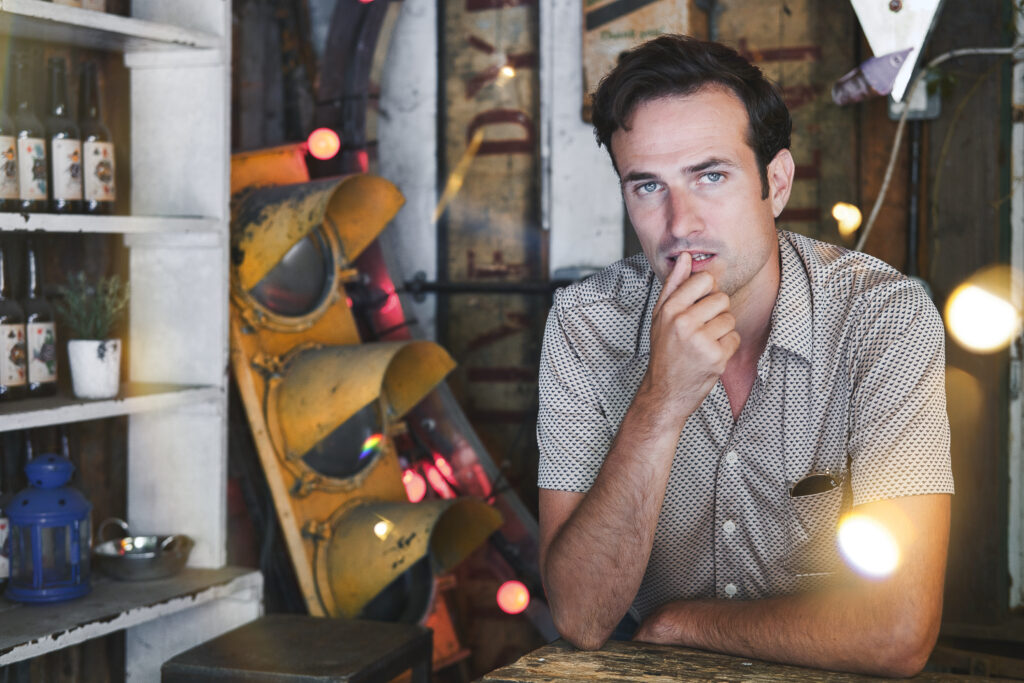
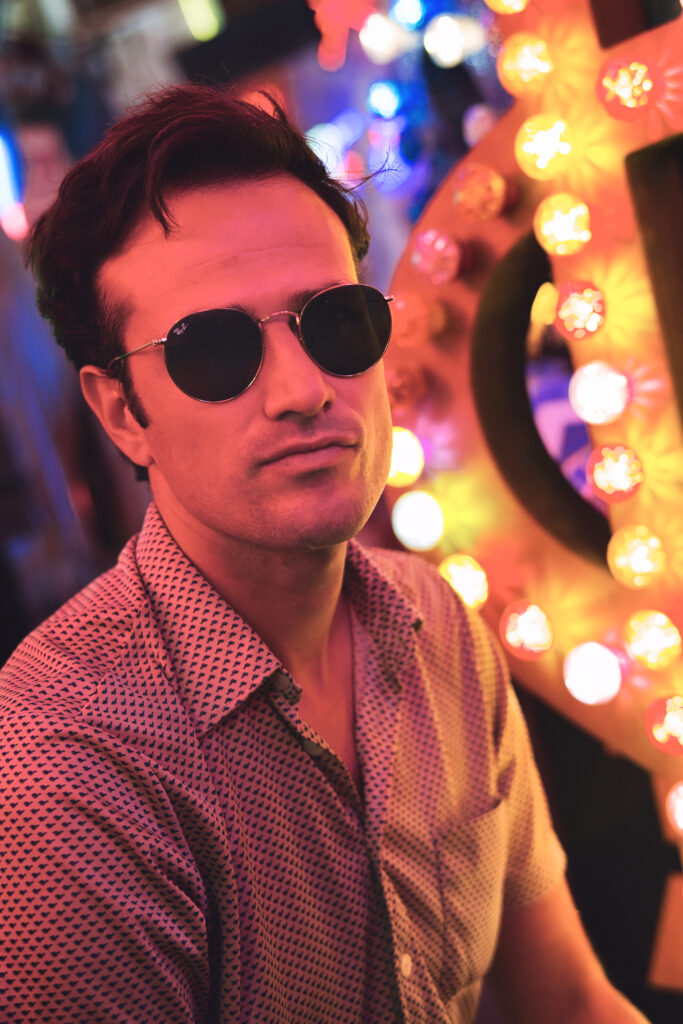
I spent a few hours there recently photographing three models, with the simple intention of seeing what I could make from the combination of people, neon and a location that has a personality every bit as strong as the subjects themselves.
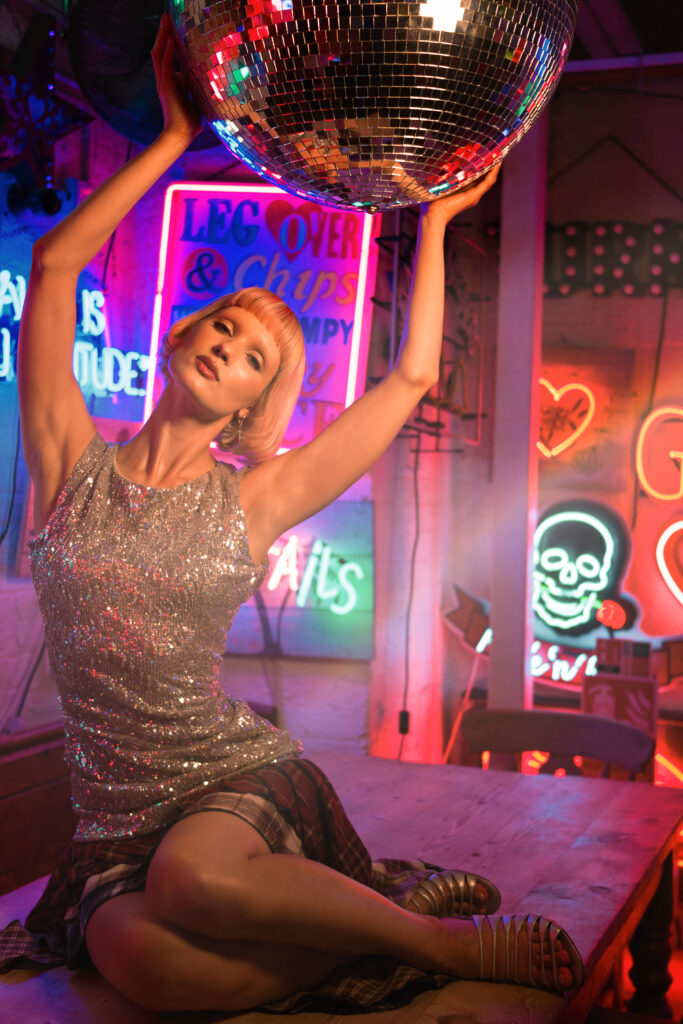
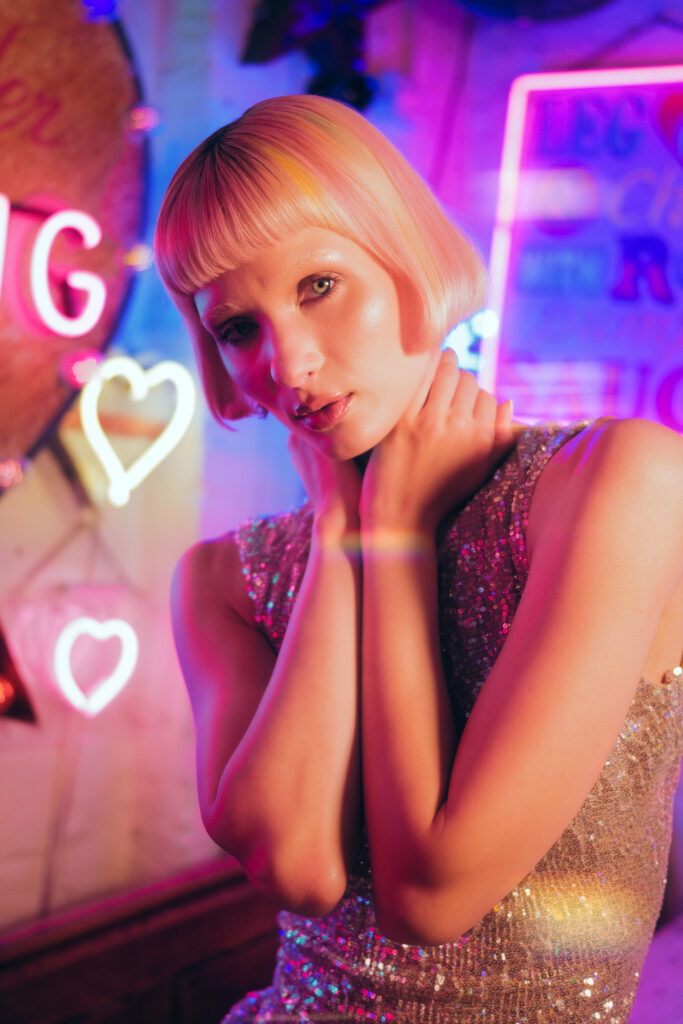
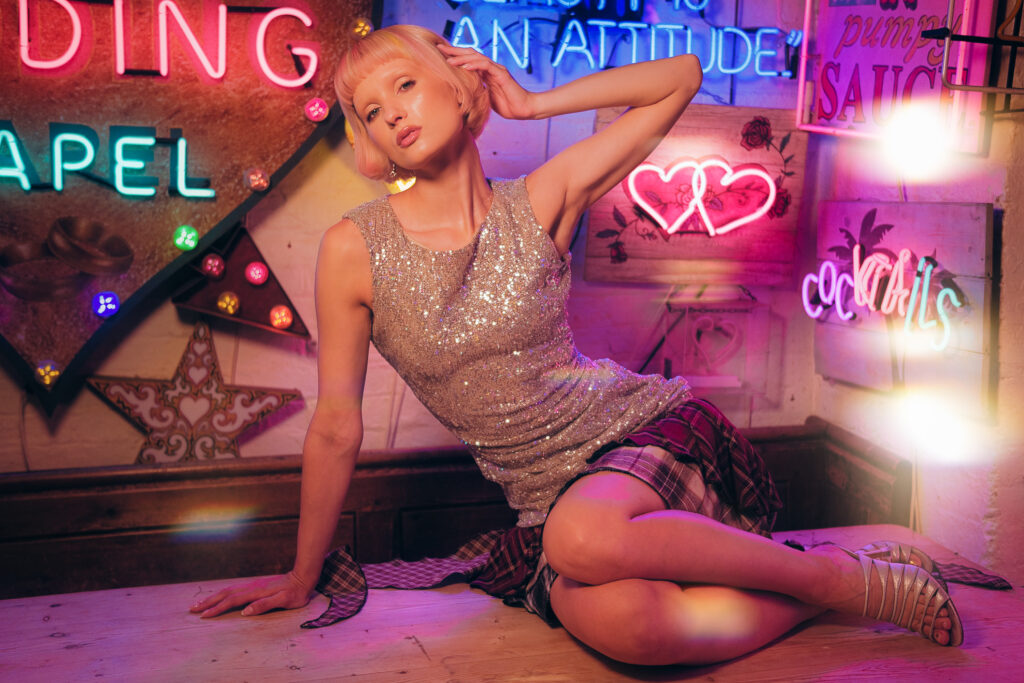
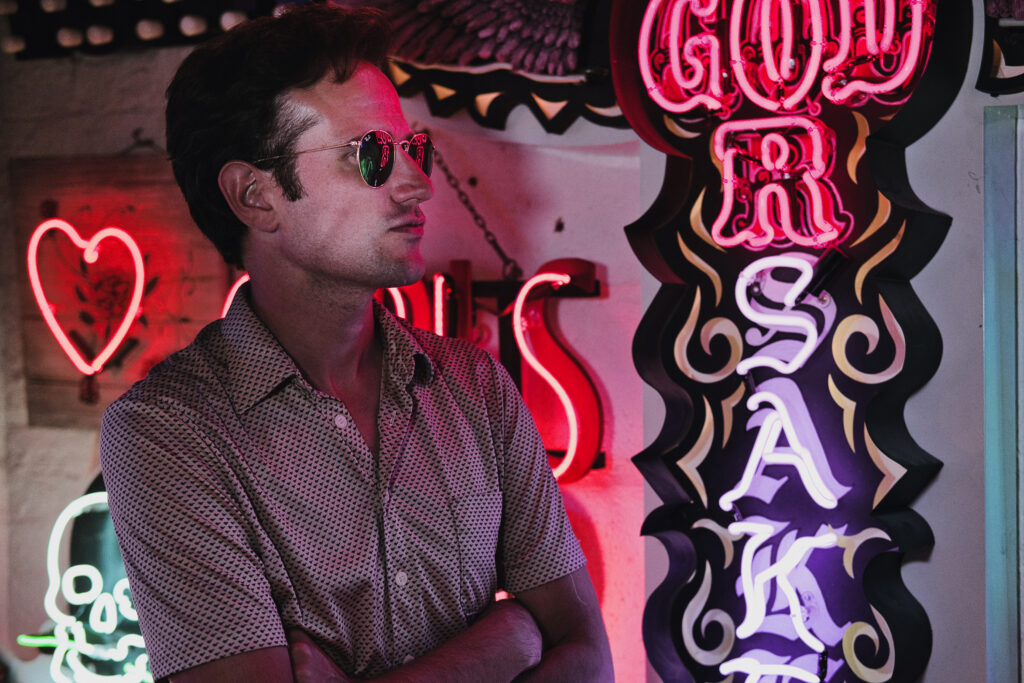
When the background refuses to behave
Portrait photography often involves simplifying things. Find good light, choose a background that doesn’t distract, concentrate on the person. Here, almost none of those rules apply, the background is the distraction.
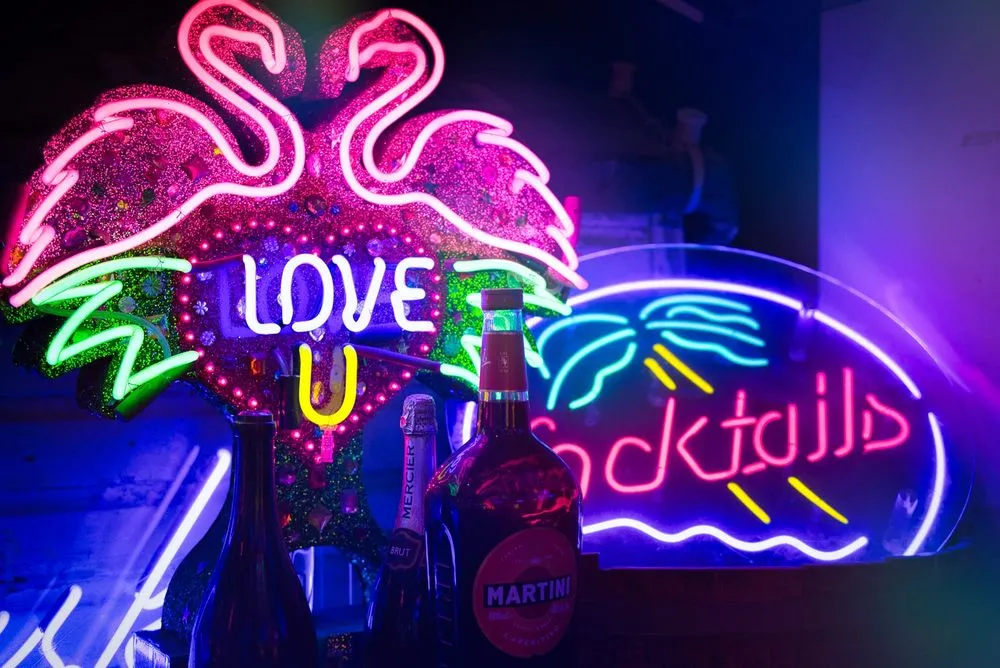
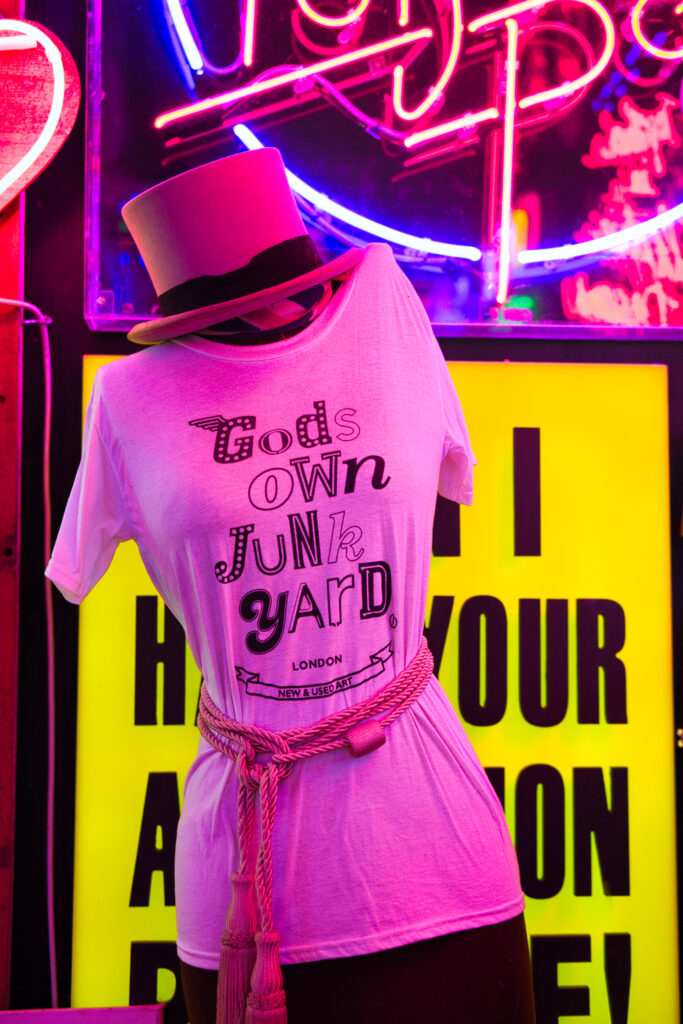
The neon signs throw pink, blue, green and orange light across faces and clothing. Exposure can change dramatically simply by moving a metre or two. Bright lettering can easily become more important than the person standing in front of it.
Trying to neutralise all that colour seemed rather pointless, so instead I decided to embrace it.

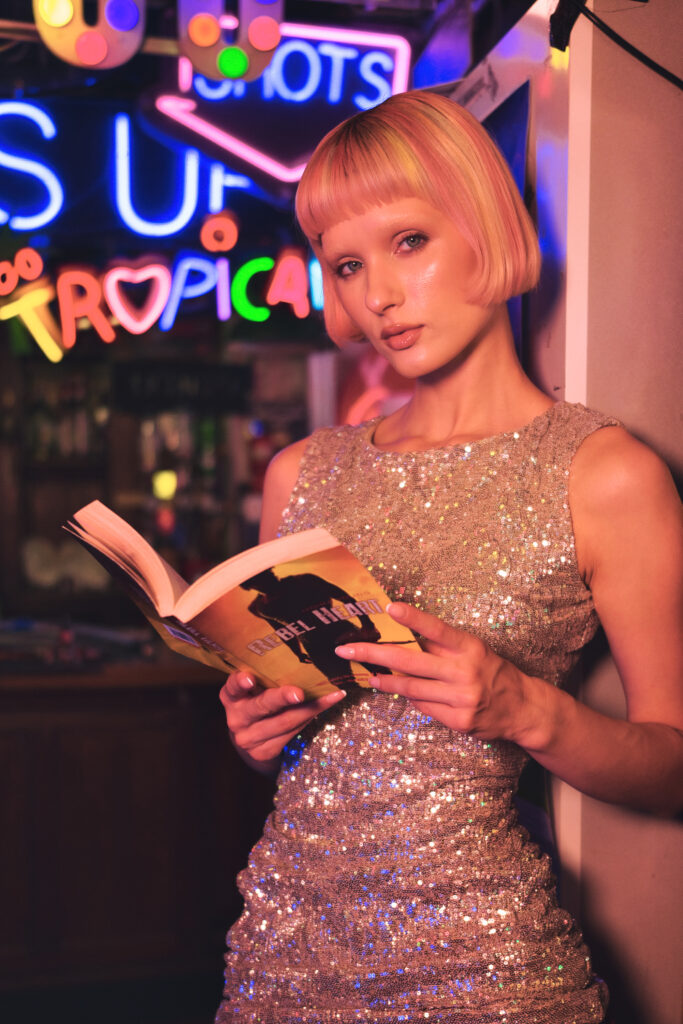
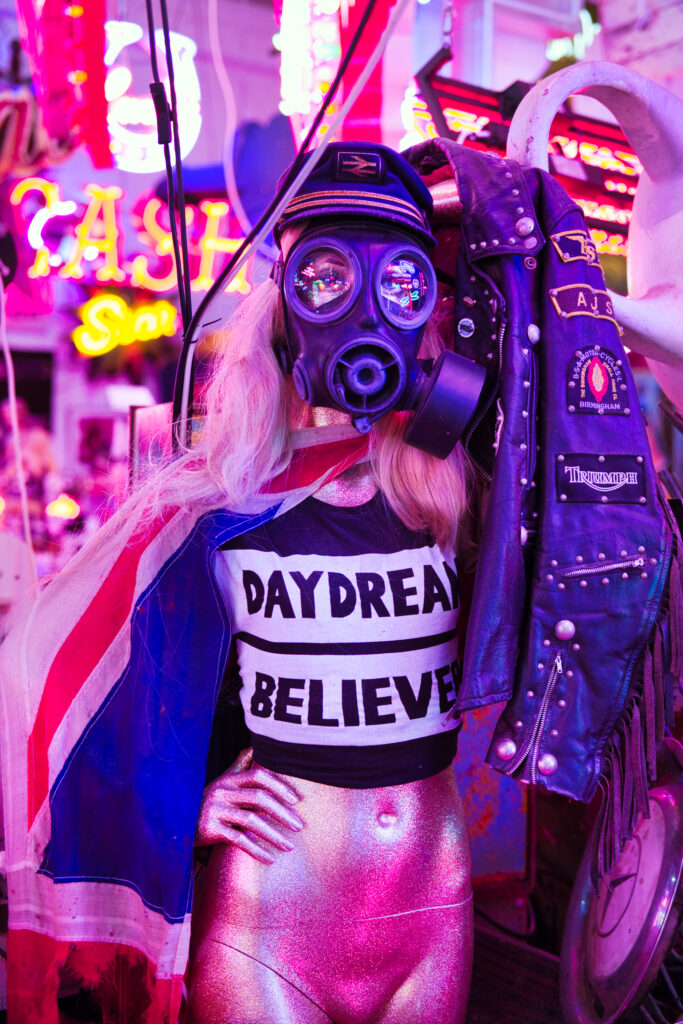
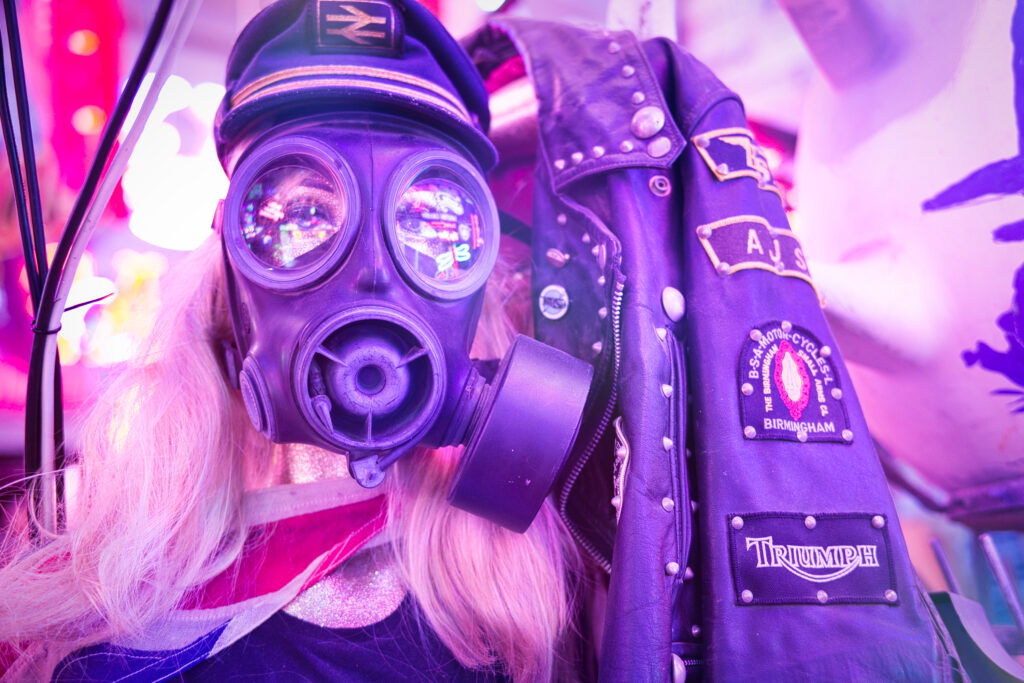
The silver sequinned dress worked particularly well. Rather than being illuminated by the signs, it picked up tiny fragments of colour from around the room. In some photographs the model almost becomes another piece of the neon installation.
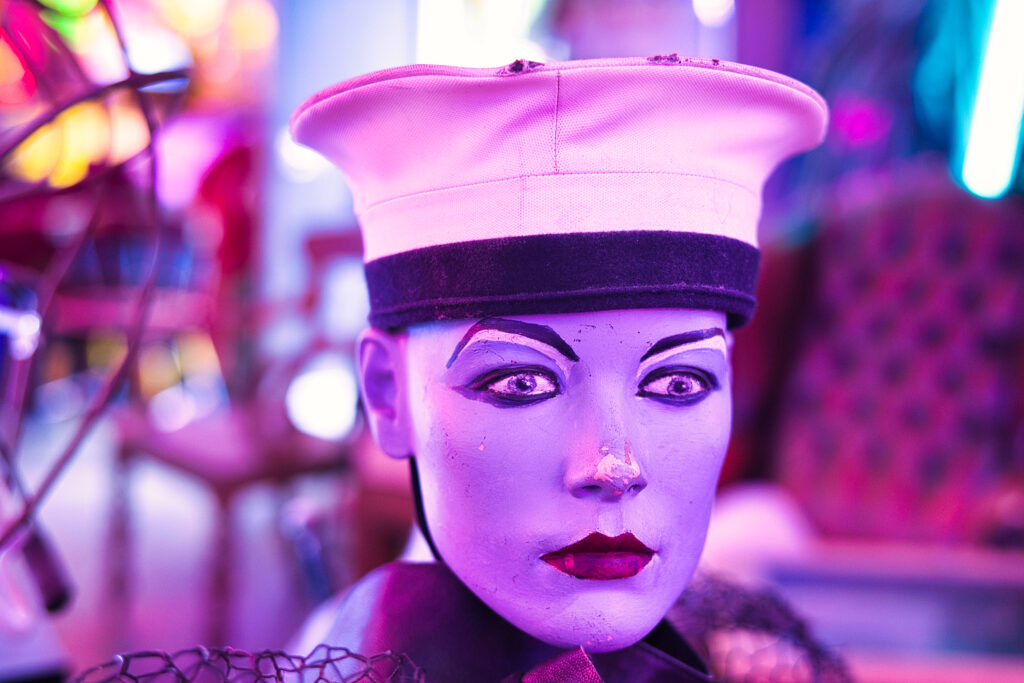
That first close portrait is probably one of my favourites from the session. There is very little conventional about the colour, but the eyes still hold the photograph together.
A useful photographic reminder
I came away from the shoot with a reminder of something I occasionally forget. An interesting location doesn’t automatically make an interesting photograph. God’s Own Junkyard provides an extraordinary amount of raw material, but the challenge is deciding what not to include. Sometimes that meant getting very close. Sometimes it meant allowing the chaos into the frame. And occasionally it meant removing the colour altogether. Most importantly, the location had to remain secondary to the people.